
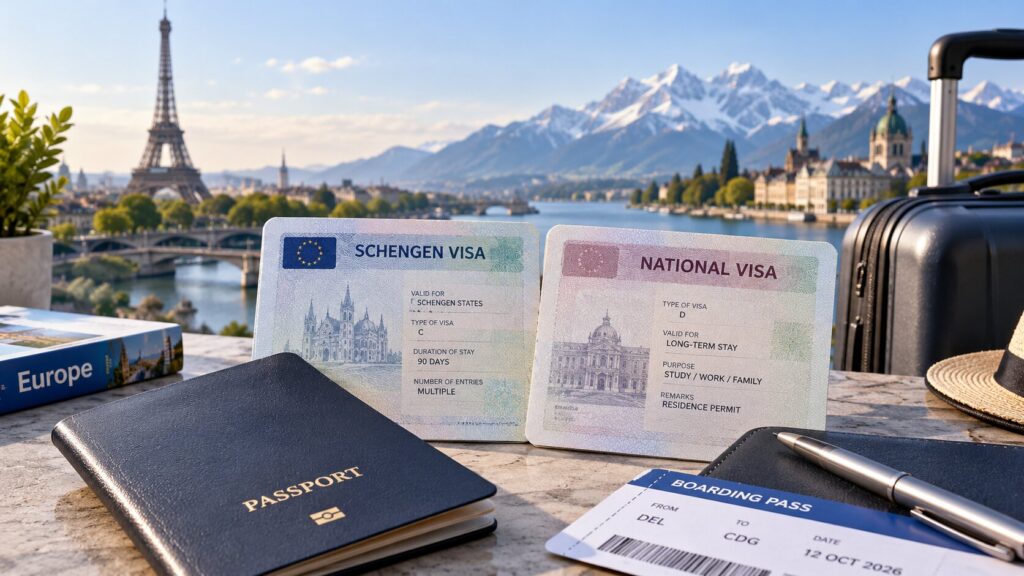
Planning to go to Europe? At some point, you are probably going to see “Schengen visa” and “national visa” pop up. And yes, they are different. The names make it sound more confusing than it actually is, though. They are basically meant for different types of trips and stays.
The basic idea is fairly simple. A Schengen visa is generally for shorter visits, with a limit of 90 days in any 180-day period. A national visa is generally used for longer stays in a specific country.
But there is more to the difference between a Schengen visa and a national visa than just the number of days you can stay. Your purpose of travel and the rights that come with your visa also matter.
What Is a Schengen Visa?
Most short trips to the Schengen Area come under the Schengen visa. So if you are going there for a holiday, visiting people you know, or attending a short business meeting, this is generally the visa to look at.
The nice part is that you can generally move between Schengen countries during your trip without needing a separate visa for every country. You just need to stay within the conditions of your visa, including the 90-day limit in any 180-day period.
So, if your plans include a few days in France, then Italy and Switzerland, a Schengen visa may work for the whole trip if you need a visa based on your nationality.
But it is not an unlimited travel pass. Check your visa to see how long you can stay, when it is valid, and whether you can enter once or more than once.
What Is a National Visa?
Planning to stay in one European country for a while? That is where a national visa usually comes into the picture. It is generally meant for stays of more than 90 days and is tied to the rules of the country where you plan to stay.
The reason for your stay can vary. You might be going there to study, take up a job, join your family, or live there for a longer period.
A national visa is usually needed for things like:
- Studying for an extended period
- Working
- Joining family members
- Taking up long-term residence
- Other approved long-stay purposes
Basically, it depends on the country. Germany has its own process for people who are staying longer. So if you are going there for a university course that lasts a few months, you would normally need to go through the long-stay visa or residence process. A tourist Schengen visa is not meant for that kind of stay.
Schengen Visa vs National Visa: Key Differences
The easiest way to understand the difference is to look at what each visa is actually designed for.
| Factor | Schengen Visa | National Visa |
| Main purpose | Short-term travel | Long-term stay |
| Typical stay | Up to 90 days in any 180 days | Usually more than 90 days |
| Main rules | Common Schengen rules | Rules of the issuing country |
| Common uses | Tourism, short business trips, visits | Study, work, family reunification and long-term residence |
| Travel within Schengen Area | Generally allowed, subject to visa conditions | May allow short trips within the Schengen Area, depending on the visa or residence status |
| Long-term residence | No | May be part of a long-term residence process |
| Work or study | Not generally intended for taking up long-term work or study | May be allowed depending on the specific visa |
Which Visa Do You Need
The easiest way to figure this out is to look at why you are traveling.
For a holiday or short visit
If Europe is just a holiday stop for you, you may be looking at a Schengen visa. The main thing is to check whether people from your country need one and make sure your trip falls within the allowed short-stay period.
For a long study program
Planning to study for more than 90 days? You will generally need to follow the destination country’s national long-stay visa or residence process.
For employment
A regular Schengen tourist visa is not for working long term. If you are going to another country for a job, you will need to check that country’s rules for a work visa or long-stay visa.
For family reunification or long-term residence
These are usually handled under national immigration rules. The process can change depending on the country and your own situation.
Key Rules to Check Before Applying
Got your travel plans sorted? Before sending in the visa application, have a look at the actual conditions that come with it. This is especially important if your trip includes more than one country.
Here are the main things to look at:
- Length of stay: Know how long you can stay.
- Purpose: Your visa should match the reason for your trip. Going for a holiday is different from going to study or work.
- Main destination: Visiting several Schengen countries? You usually apply through the country that is your main destination.
- Number of entries: Check if you have single, double or multiple entry.
- Travel area: Find out which countries are covered by your visa.
- Conditions: Your visa sticker will list the important details.
- Long-term plans: Going to stay beyond 90 days? You will need to look at the national visa or residence process instead.
There is also a final step at the border. Even with a valid visa, officials can check your documents and confirm that you meet the entry requirements.
Sum Up!
There is no one-size-fits-all answer when it comes to choosing between a Schengen visa and a national visa. It really comes down to your trip. A short holiday is one thing, while moving to a country for work, studies or family reasons is something completely different.
So, before you apply, look at your plans first. Once you are clear about your purpose, stay and travel plans, choosing the right visa becomes much easier.At Holiday Wanders, we help travelers figure all this visa stuff out before they apply.